Why Do People Say CBD Is Sold at Pharmacy Counters Now?
People say CBD is “at the pharmacy counter” because cannabidiol products have moved from specialty shops and online stores into more familiar retail settings. Some independent pharmacies and other health-focused retailers carry them, and CBD may sit near supplements or personal-care products. But the phrase can suggest more than it means: CBD is not stocked at every pharmacy, and a product sold in a pharmacy is not automatically approved or recommended by a pharmacist.
That distinction matters for shoppers in South Florida and elsewhere. CBD labels can look clinical, while rules and product quality vary. Before buying, it helps to know what the product contains, what its lab report actually says, and whether it could create a problem with a drug test or a medication you take.
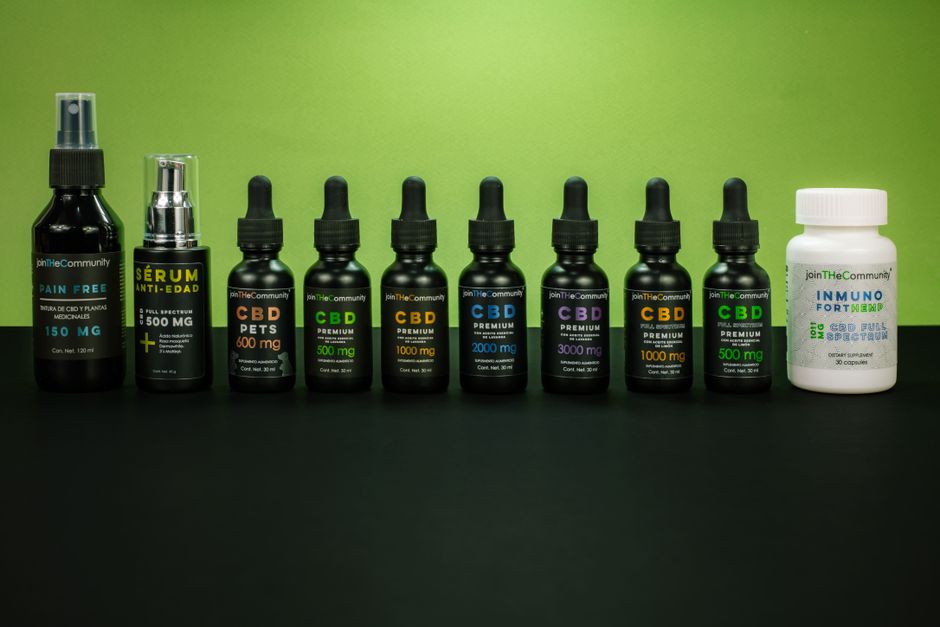
How CBD moved into mainstream wellness
CBD, short for cannabidiol, is a compound found in cannabis plants that does not produce the “high” associated with THC, or tetrahydrocannabinol. Interest in CBD expanded as people encountered it in oils, capsules, creams, gummies, and other products marketed for general wellness.
A major turning point was the 2018 federal Farm Bill, which removed hemp from the federal definition of marijuana under certain conditions. The law defines hemp as cannabis with no more than 0.3% delta-9 THC by dry weight. That change helped open the door to a much larger hemp and CBD marketplace. It did not, however, give every CBD product blanket FDA approval or settle every question about how CBD may https://highstylife.com/tested-athlete-cbd-choices-broad-spectrum-vs-isolate/ be marketed, sold, or regulated.
That shift helps explain the phrase mainstream wellness CBD: CBD became easier to find alongside familiar supplements and personal-care items, rather than only in businesses devoted to cannabis. Retailers may see it as a way to serve customers who are curious about hemp-derived products but prefer shopping somewhere they already know.
Still, the location does not tell you whether the product is effective, appropriate for you, or consistently made. A pharmacy may offer a more familiar place to ask questions, but the product itself still needs a careful look. And a pharmacy’s decision to stock an item should not be mistaken hemp extract refinement for proof that it treats a health condition.
What “at the pharmacy counter” does—and does not—mean
The wording can refer to CBD products sold in or near a pharmacy, not necessarily a medicine dispensed by prescription or personally endorsed by a pharmacist. Stock and policies differ by store and location. Some pharmacies carry no CBD products, while others may sell a limited selection or direct customers to a retailer.
CBD is not an FDA-approved treatment for most of the health conditions that products may mention in advertising. The FDA has approved a prescription medicine containing purified CBD for specific seizure disorders, but that is different from the oils, gummies, and creams sold as supplements or wellness products. Consumers should be wary of claims that a retail CBD product cures, prevents, or treats a disease.
If you take medication, ask a clinician or pharmacist before trying CBD. CBD can affect how the body processes some medicines, and the possibility of an interaction depends on the person, the dose, and the medication. “Natural” does not mean risk-free.

Broad-spectrum, full-spectrum, and isolate: what’s in the bottle?
These terms describe the types of hemp-derived compounds a product is intended to contain. They are useful starting points, but they are not substitutes for a current lab report.
Label term What it generally means What shoppers should check Full-spectrum CBD plus other hemp compounds, with some THC potentially present within legal limits. How much THC the batch contains and whether the amount is listed on a batch-specific COA. Broad-spectrum CBD and other hemp compounds, with THC removed or reduced to a level the maker describes as non-detectable. The COA’s THC results, the lab’s reporting limits, and whether the report matches the product’s batch. CBD isolate CBD separated from most other hemp compounds; it is intended to contain CBD alone. The measured CBD amount and any reported THC or contaminant results.“Broad-spectrum CBD” is often presented as a middle ground: more hemp compounds than an isolate, but less THC than a full-spectrum product is expected to contain. The label alone cannot confirm that distinction. Formulas and manufacturing methods vary, so read the product’s ingredient list and check the analysis for the actual batch.
The entourage effect, in plain English
The “entourage effect” is the idea that compounds in cannabis—such as CBD, THC, and other plant chemicals—may affect one another when present together. In simple terms, it is a proposed team effect rather than a claim that every ingredient works better just because it shares a bottle. The concept is still being studied, and it should not be treated as established proof that full-spectrum or broad-spectrum products work better than CBD isolate.
THC-free claims and drug-testing risk
Some shoppers specifically seek THC-free products because of workplace, sports, or other drug testing. That is a reasonable concern, but the words “THC-free” on a label do not guarantee a negative test. A product may contain trace THC that was not declared, may be contaminated during manufacturing, or may have a test result that falls below one lab’s reporting threshold but not another’s.
Drug tests generally look for THC-related compounds, not whether someone intended to buy THC. Using a CBD product—especially one labeled full-spectrum—can carry a risk of a positive result. Even products marketed as broad-spectrum or THC-free may not eliminate that risk. If a positive result could have serious consequences, avoiding CBD products is the most cautious option; a label claim cannot promise a particular test outcome.
This is why a batch-specific certificate of analysis matters. A certificate of analysis (COA) is a lab report showing what was measured in a particular product sample. “Batch-specific” means the report identifies the same production batch or lot printed on the item you are considering—not simply a generic report for the brand.
How to check a COA before buying
Look for a QR code or web link on the package, then make sure the report is for the exact product and lot. If the company provides only a general statement that its products are tested, that is not the same as letting customers review results for the batch on the shelf.
- Match the lot number. Compare the batch or lot number on the package with the one on the COA. A report for a different batch does not verify your item.
- Check the CBD amount. Look at the measured CBD per serving and per container, and compare it with the label. Those numbers are not interchangeable.
- Look for THC results. Check the reported amount of delta-9 THC and, where included, other tested cannabinoids. “Not detected” means the lab did not detect it above its stated limit; it does not always mean absolute zero.
- Review contaminant testing. A useful report may include tests for pesticides, heavy metals, residual solvents, and microbes. Which tests appear can vary by product and lab.
- Check the lab and date. Look for the laboratory’s name, test date, and contact details. An independent lab report is more useful than an unexplained brand graphic, though a report still depends on the sample and testing method.
A COA is a piece of evidence, not a guarantee that every unit in a store was tested or that the product will work as advertised. It also does not answer every safety question. But without a matching, readable batch report, claims about CBD content or THC levels are harder to verify.
What lab testing and refinement can—and cannot—tell you
Hemp-derived CBD commonly starts with an extraction step, followed by processing to concentrate CBD or separate it from other plant material. Refinement may be used to remove unwanted components, reduce THC, or produce an isolate. The exact methods differ among manufacturers. A company should be able to explain its process in understandable terms rather than relying on phrases such as “pharmaceutical grade” without supporting detail.
Testing may happen at more than one stage, but the most useful report for a shopper is one tied to the finished product and its batch. A test of raw hemp or an ingredient does not necessarily prove what is in the finished gummy, oil, or capsule. Processing, dilution, storage, and packaging can affect the final contents.
When checking a product, look for both the amounts of cannabinoids and relevant safety testing. A report that measures CBD but says nothing about THC may not answer the question a drug-tested shopper has. Likewise, a THC result without a clear batch match offers limited reassurance.
Why the pharmacy setting can appeal to shoppers
For many customers, buying CBD at a familiar retail counter feels less intimidating than ordering from an unfamiliar website. They may be able to ask about ingredients, compare formats, or get a reminder to check with a health professional about medication interactions. That is a practical convenience—not evidence that pharmacy CBD products are all standardized or endorsed.
Shoppers can make the conversation more useful by asking a few direct questions: Is this full-spectrum, broad-spectrum, or isolate? Can I see the COA for this exact batch? Does it report THC and common contaminants? Who should I ask about a possible interaction with my medication? If staff cannot answer, the manufacturer should provide clear documentation.
About prices: don’t fill in what the source leaves out
A common mistake in scraped articles and product roundups is to discuss products without listing prices, then imply that readers can compare value. If no prices are available, do not invent them or suggest a specific item is the cheapest. CBD prices vary by product type, package size, concentration, retailer, and location; promotions can change them, too.
Instead, compare the actual price at the store with the amount of CBD in the container. A price-per-milligram calculation can help compare products of similar form, but it does not establish quality or effectiveness. Also consider whether the seller provides a batch-specific COA and whether the report covers the tests that matter to you. A lower price is not a bargain if the contents are unclear.
A practical checklist before you buy
- Confirm that the product is actually available at your local pharmacy; “sold at pharmacy counters” does not mean every pharmacy carries it.
- Identify whether it is full-spectrum, broad-spectrum, or CBD isolate.
- Match the package’s lot number to a current COA for the finished product.
- Read the THC result and its reporting limit, especially if you face drug testing.
- Review the CBD amount, ingredients, and available contaminant testing.
- Ask a pharmacist or clinician about possible medication interactions.
- Compare real, current prices rather than relying on missing or scraped pricing.
CBD’s arrival in more familiar retail settings is part of its move into mainstream wellness, helped by changes in hemp policy after the 2018 Farm Bill. But a pharmacy shelf is only a starting point for evaluation. Read the label, check the batch-specific COA, understand the limits of THC-free claims, and get professional advice when medications or health conditions are part of the picture.